Your Ad Account Is Optimizing on Fiction
By Rajesh Kumar, Founder, Attribi · · Updated
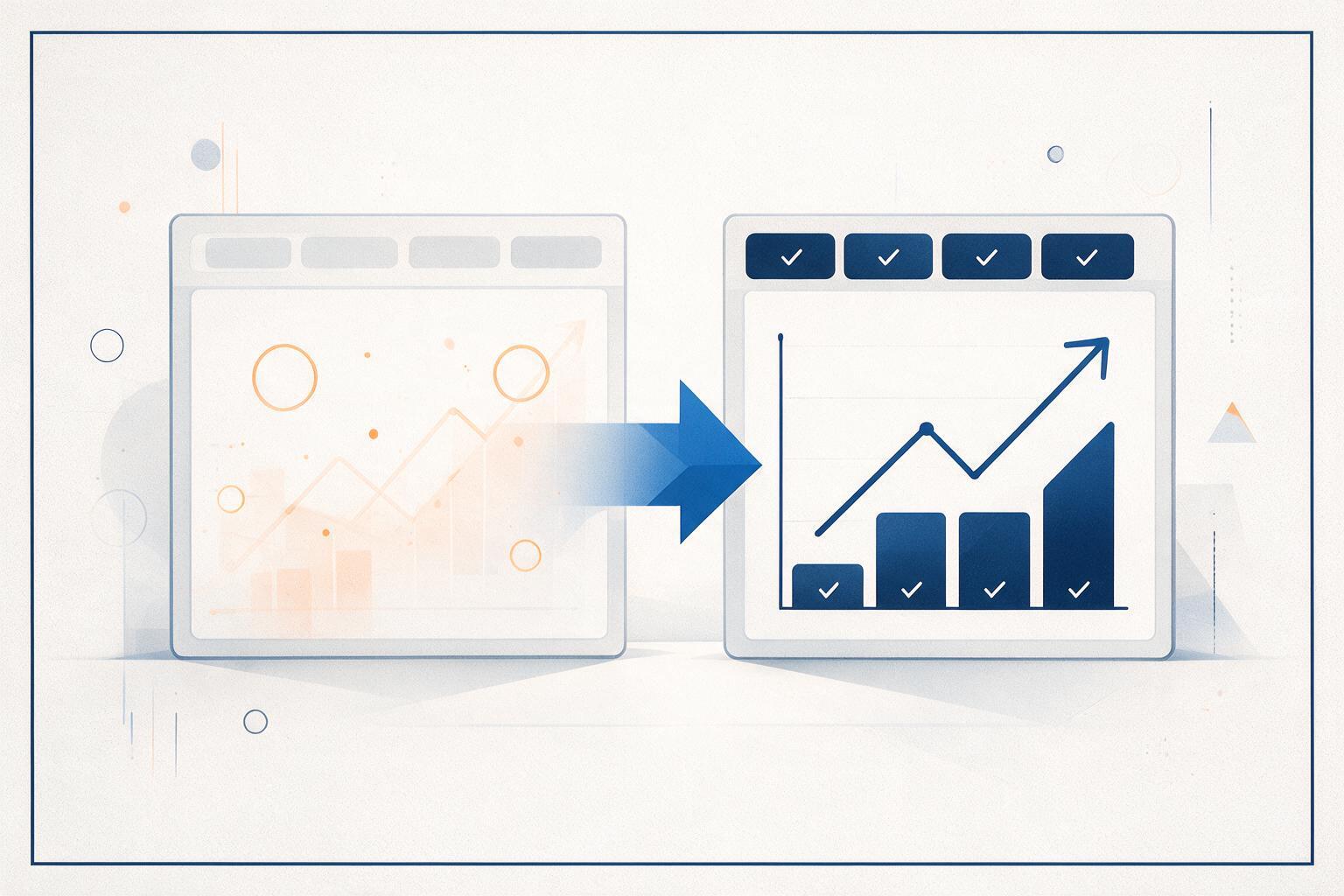
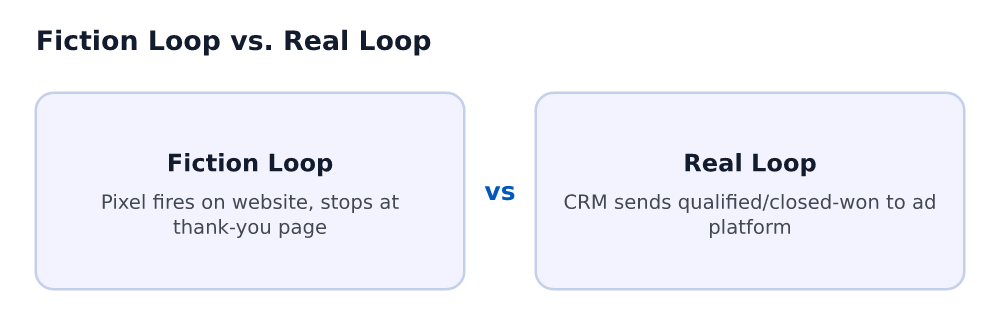
Your Google Ads dashboard tells a reassuring story. Cost per lead is low. Volume is strong. But when you cross-check with your CRM, the picture fractures. Most leads never convert. Your sales pipeline is thin. And your boss wants to know why the ad spend is rising while revenue stays flat. The problem is not your bidding or your targeting. The problem is that your ad platforms are basing every decision on a version of reality that stops at your thank-you page. The messy, offline human interactions where deals actually close are invisible to the pixel. That means your campaigns are being optimized on fiction, not on real revenue.
The three-question test
Take thirty seconds and answer these three questions honestly:
- Do most of your leads convert through a phone call, a WhatsApp conversation, or an in-person meeting rather than on your website?
- Is the majority of your audience browsing on an iPhone?
- Do your ad platforms report a healthy cost per lead while your CRM tells you very few of those leads turn into closed deals?
If you answered yes to all three, your ad account is optimizing on fiction. The conversion events your pixel fires are not the conversion events that matter. Every optimization decision (the audiences you target, the bids you set, the budget you allocate) is being steered by signals that have nothing to do with revenue.
You can fix it by connecting your CRM and letting real revenue signals tell the truth. See which ads actually close deals.
Why your pixel cannot see the real conversion
Offline conversion tracking is the process of sending CRM outcomes (qualified lead, closed deal) back to an ad platform so the platform can attribute that result to the ad click that generated it. Unlike pixel-based tracking, which stops at the website, offline conversion tracking follows the lead through phone calls, messages, and meetings to record the real conversion.
The conversion pixel lives on the website and dies on the thank-you page. It can record a form submission, a page view, or a button click. But the moment a lead picks up the phone, opens WhatsApp, or walks into a showroom, the pixel loses sight of them entirely. For real-estate lead generation, the true conversion happens days or weeks later, outside the browser. The pixel never sees that event, so it tells the ad platform that the story ended with a form fill. That is fiction.
The iOS 14.5 problem
Apple's App Tracking Transparency framework, released in April 2021, asked iPhone users a simple question: do you want this app to track your activity? The vast majority said no. Since then, the pixel's ability to track individual users on iPhones has been severely limited. For lead-gen businesses where most of the audience is on iOS, the pixel is effectively blind on the dominant device for high-intent buyers. Every "conversion" it reports from an iPhone user is a guess, not a measurement.
The WhatsApp and phone-call gap
When a prospect fills out a form and then connects with your sales team via WhatsApp or a phone call, the real conversion event happens off-page. The pixel never fires again. The platform sees a lead that never converted, even if that lead later becomes your most valuable deal. This gap is not a small measurement error; it is the primary conversion event for most lead-gen teams, and it is completely absent from the data your ad platforms are optimizing against.
What your ad platform is actually optimizing on
When the only signal your ad platform receives is a form fill, it optimizes bids toward people who fill out forms. That sounds logical until you look at who fills out paid-lead forms in real estate. Brokers selling lead lists, job seekers, and service providers all submit forms in bulk. To the pixel, their conversions look identical to a genuine buyer's conversion. The platform cannot distinguish between a broker scraping data and a family looking for a Dubai apartment.
So your budget chases the audience that produces the most form fills, not the audience that produces the most revenue. Your campaigns get better at attracting junk because junk is what the platform is rewarded for. The feedback loop is closed on the wrong event.
The only way your ad platform can learn what a real buyer looks like is if you tell it. Connect your CRM and start tracking closed-loop ROI.
The cost of optimizing on fiction
When ad platforms optimize on form fills, three things happen. First, wasted spend. You pay for clicks that never become customers. Second, misallocated budget. Campaigns that look profitable in dashboards get more money while campaigns that quietly generate real revenue starve. Third, the absence of a feedback loop. Without real outcomes flowing back to the platform, your bidding algorithms never learn what a closed deal actually looks like. Lead quality degrades quarter after quarter, and you have no metric to prove it.
ROI becomes invisible. Your reporting says one thing; your CRM says another. The business sees rising ad costs and stagnant revenue and asks what marketing is delivering. Without offline conversion tracking, you cannot give a clear answer. how to measure ROI on paid leads in your CRM covers what that answer looks like once the loop is closed.
How to close the loop
The fix is to stop sending fake conversions and start sending real ones. Instead of relying on a pixel that stops at the website, you move your conversion signal to the place where deals actually close: your CRM.
Offline conversion tracking works by taking the outcomes your CRM already records (qualified lead, viewing booked, closed-won) and uploading them to your ad platforms as conversion events. This is done server-side, through each platform's conversion API (CAPI). The CRM data is matched back to the originating ad by email or phone and sent as a conversion that the platform can use for bidding and reporting.
Attribi connects directly to six ad platforms (Google, Meta, LinkedIn, Microsoft, TikTok, and Snapchat) and six CRMs (Salesforce, HubSpot, Pipedrive, Zoho, Freshsales, and LeadSquared) plus Google Sheets and Webhook destinations. That means you can pipe revenue outcomes back to every platform you buy media from, without building a separate integration for each one. For a step-by-step walkthrough of the real-estate case, see how offline conversion tracking attributes closed property deals. If Salesforce is your CRM, there are platform-specific guides for Google Ads and Meta.
What offline conversion tracking actually does

Here is the sequence. A prospect clicks your ad, lands on your site, and fills out a form. The click and the form are recorded. Days later, your sales team qualifies the lead in the CRM. That "qualified" signal is uploaded to the ad platform via CAPI. A week after that, the lead signs a deal. "Closed-won" is uploaded as a final conversion event. Now the platform has seen the full journey: click to qualification to revenue. It can use that data to find more people like the ones who actually closed, not just the ones who filled out a form.
Because closed deals are low-volume in real estate, Attribi also sends higher-volume mid-funnel CRM signals (such as a lead being qualified or a viewing being booked) so the platform has enough data to optimize toward quality even before a deal closes. That keeps your campaigns moving toward real buyers without waiting months for a handful of sales.
Why this fixes the three questions
Once CRM outcomes flow back to your ad platforms, the three questions flip. Phone calls, WhatsApp conversations, and in-person meetings are no longer invisible. They are the conversion events you track. iPhone users are not a blind spot; the match happens on your CRM data, not on a device-level identifier. And your platforms stop chasing form-fill junk and start chasing closed deals. The data they optimize on is the same data your business runs on.
FAQ
What does it mean for an ad account to optimize on fiction? It means the only conversions your ad platform can see are website events like form fills, so it bids toward people who fill out forms rather than people who buy. When the real conversion happens offline, every bid, audience, and budget decision is steered by a signal that has no connection to revenue.
Why can't the pixel see phone calls or WhatsApp conversions? The pixel is a snippet of code that runs in a browser. It fires only on website events. Once a lead leaves the site and picks up the phone or opens WhatsApp, the pixel cannot follow them. The conversion event happens in an environment the pixel does not have access to.
How do I know if my ad account is optimizing on fiction? Take the three-question test. If most of your leads close offline, your audience is heavily on iPhone, and your CRM shows far fewer closed deals than your ad dashboards suggest, your ad platforms are optimizing on noise instead of revenue.
Does offline conversion tracking work with iPhone users? Yes. Unlike pixel-based tracking, offline conversion tracking does not rely on device-level identifiers that iOS restricts. It matches the lead's email or phone number from your CRM to the ad click, so iPhone users are tracked the same way as anyone else.
What platforms support offline conversion uploads? Google, Meta, LinkedIn, Microsoft, TikTok, and Snapchat all support offline or server-side conversion uploads through their conversion APIs (CAPI). Attribi connects all six, so you can feed real outcomes to every platform you advertise on.
Stop optimizing on fiction
You do not have to keep optimizing on fiction. Real revenue data exists in your CRM. Feed it back to your ad platforms and let them bid on truth. Start your free trial.
Send closed deals to Meta as Conversions API events.
Attribi matches each CRM outcome back to the lead it recorded and sends it through the Conversions API with hashed identifiers.
No credit card. Free up to 500 visitors a month. New workspaces start with 30 days on Pro.